


How Big are Soccer Goals? Understanding Their Dimensions
Soccer, many call football, a game cherished worldwide, revolves around scoring goals. A fundamental question for enthusiasts and players alike is, “How big are soccer goals?” The answer varies based on the game’s level, ranging from youth to professional, and even includes variations for indoor play and futsal. In this comprehensive exploration, I’ll delve into the intricacies of soccer goal dimensions, material, and safety standards, providing a deeper understanding of these crucial elements in the world of soccer.
Standard Soccer Goal Dimensions
Regulation Size (Adults & Professional Play)
For the adult and professional levels, the standard dimensions are quite specific:
- Width: 24 feet (7.32 meters)
- Height: 8 feet (2.44 meters)
These are the universal measurements for professional games, endorsed by governing bodies like FIFA and UEFA.
Youth Soccer
In youth soccer, goal sizes are tailored to the age group:
- U6-U8: Goals measure 4 feet in height and 6 feet in width.
- U9-U12: The size increases to 6.5 feet high and 18.5 feet wide.
- U13 and above: Players transition to the adult-sized goals.


Indoor Soccer and Futsal
- Indoor Soccer: Here, goals are smaller, typically 6.5 feet high and 12 feet wide.
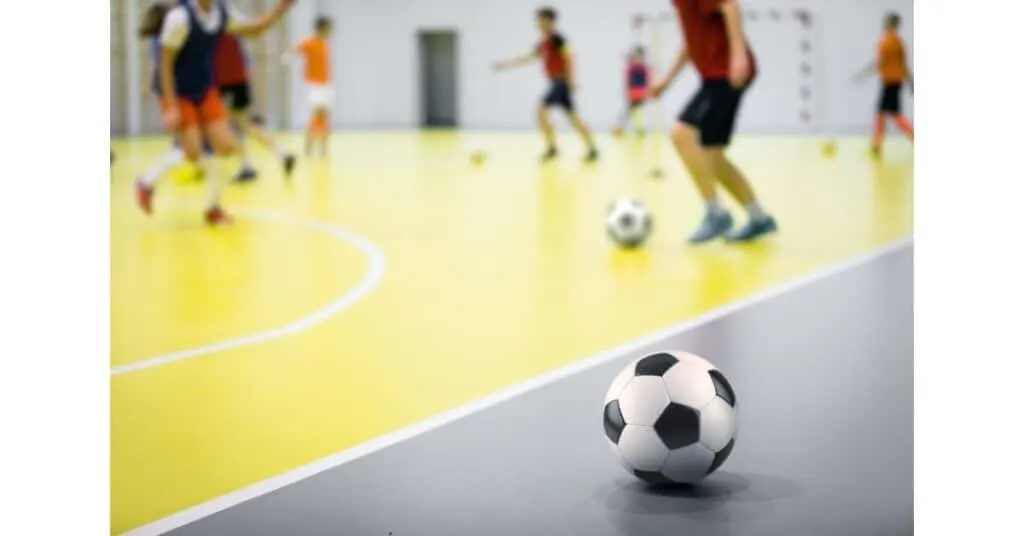
- Futsal: The goals in futsal, a variant of indoor soccer, are 9.8 feet wide and 6.6 feet high.
Also Check Out: Youth Soccer Field Dimensions
Goal Depth and Shape
The depth of soccer goals, spanning from the front to the back of the goal frame, varies. For standard goals, a 5-foot depth at the base is common. Goal shapes also differ, ranging from box-shaped to designs with a single bar connecting the posts at the back.
Goal Material
Soccer goals are constructed from various materials:
- Metal (aluminum or steel) for durability.
- PVC for smaller, portable goals.
Netting
Netting is vital for catching the ball upon a successful goal. The mesh size is crucial and must be small enough to prevent the ball from passing through.

Safety Standards
A non-negotiable aspect of goal design is safety. Goals must be securely anchored to prevent any movement or tipping.
Comparative Table of Soccer Goal Sizes
Let’s break down the sizes visually:
| Level/Type | Width (feet/meters) | Height (feet/meters) | Depth (feet/meters) | Appropriate Age/Use |
| Regulation Size | 24 ft / 7.32 m | 8 ft / 2.44 m | 5 ft / 1.52 m | Adults, Professional |
| Youth (U6-U8) | 6 ft / 1.83 m | 4 ft / 1.22 m | Varies | Children 5-8 years |
| Youth (U9-U12) | 18.5 ft / 5.64 m | 6.5 ft / 1.98 m | Varies | Children 9-12 years |
| Youth (U13+) | 24 ft / 7.32 m | 8 ft / 2.44 m | 5 ft / 1.52 m | Teenagers 13+ years |
| Indoor Soccer | 12 ft / 3.66 m | 6.5 ft / 1.98 m | Less than outdoor | Indoor Soccer |
| Futsal | 9.8 ft / 3 m | 6.6 ft / 2 m | Less than outdoor | Futsal (Indoor) |
Material and Safety Features of Soccer Goals
Let’s examine the materials and safety aspects:
| Material/Feature | Description | Benefits/Considerations |
| Aluminum | Light, durable, rust-resistant | Preferred for professional play |
| Steel | Heavy and sturdy | Used in public parks, schools |
| PVC | Lightweight, portable | Common for youth goals |
| Netting | Nylon or polyethylene | Prevents ball from passing through |
| Anchoring | Ground anchors, sandbags, counterweights | Prevents tipping, ensures safety |
Additional Insights
- Material: The choice of material for goals impacts their weight, durability, and suitability for different levels of play.
- Netting: The design and material of the netting are key for defining a goal and ensuring its visibility and functionality.
- Safety: Anchoring and stability are paramount, particularly for portable goals, to prevent accidents and injuries.
- Shape and Maintenance: Different shapes cater to various needs, and regular maintenance ensures the goals’ longevity and safety.
- Regulations: Adherence to specific standards set by soccer organizations is crucial for official matches.
Wrapping Up: How Big Are Soccer Goals?
The Heart of the Beautiful Game
In conclusion, soccer goals are a fundamental aspect of the beautiful game. Their size, design, and placement are not just practical considerations but are integral to the sport’s very essence. From backyard kickabouts to the World Cup final, the goal remains the ultimate destination, the point where ambition, skill, and effort converge. Understanding the intricacies of soccer goals deepens our appreciation for soccer, a sport that continues to captivate and unite people worldwide.
Whether it’s the sturdy, full-size goals of professional stadiums or the makeshift goals in a park, each has its own story and plays a role in the ongoing evolution of soccer. As we watch, play, and enjoy the game, let’s remember the humble soccer goal – not just a piece of equipment, but a symbol of dreams, challenges, and the enduring spirit of competition.
FAQs
How have soccer goal sizes impacted player training methods?
Soccer goal sizes have a big influence on training tactics. Coaches tailor drills to the goal size players will face in matches. For instance:
- Smaller goals in youth training focus on precision and technique.
- Larger goals in adult training emphasize shooting power and covering more area.
Goalkeepers train differently based on goal size, focusing on agility for larger goals and reaction times for smaller ones.
- This approach ensures players are well-prepared for the specific challenges they’ll encounter in actual games.
What role do soccer goals play in injury prevention?
Soccer goals, especially their design and installation, are crucial for injury prevention:
- Proper anchoring prevents goals from tipping over, a common cause of serious injuries.
- Regular maintenance checks for structural integrity, ensuring the goals don’t collapse during play.
The materials used, like smooth edges on metal goals, minimize the risk of cuts or bruises.
- In essence, a well-designed and maintained goal is a safety net against potential injuries on the field.
How are soccer goals transported and stored?
Transporting and storing soccer goals can be quite a task, depending on their size and design:
- Portable goals: Often made of lightweight materials like PVC, they can be disassembled and easily transported.
- Permanent goals: Usually found in professional settings, these require special equipment for movement due to their size and weight.
- Storage: Goals are typically stored in a secure, dry place to prevent damage or rust, especially important for metal goals.
Can the size of soccer goals affect match outcomes?
Absolutely, the size of soccer goals can influence the flow and outcome of a soccer match:
- Larger goals might lead to higher scoring games as they offer more space to target.
- Smaller goals tend to result in lower scores, emphasizing defense and precision.
- Goalkeepers’ strategies and positioning are heavily influenced by goal size, impacting their ability to defend.
What are the environmental considerations for soccer goal manufacturing?
When manufacturing soccer goals, environmental aspects are increasingly considered:
- Material choice: Eco-friendly materials are preferred to reduce the carbon footprint.
- Durability: Longer-lasting goals mean less frequent replacement and waste.
- Recycling: Using recyclable materials ensures goals can be disposed of responsibly at the end of their life cycle.
📊 Table: Comparison of Goal Sizes in Different Soccer Variations
| Soccer Variation | Goal Size (Width x Height) | Notable Features |
| Standard Soccer | 24 ft x 8 ft | Standard for professional play |
| Youth Soccer | Varies (6 ft x 4 ft, etc.) | Scaled down for younger players |
| Indoor Soccer | 12 ft x 6.5 ft | Smaller due to reduced field size |
| Futsal | 9.8 ft x 6.6 ft | Designed for indoor play on smaller fields |
How does goal size variation affect coaching strategies?
Coaches adapt their strategies based on goal sizes:
- In youth soccer, there’s a greater emphasis on skill development and accuracy.
- For adult soccer, strategies often revolve around exploiting the larger goal size for scoring.
- Training drills are adjusted accordingly, focusing on different aspects of shooting and defending.
Are there any cultural differences in soccer goal preferences?
Cultural differences do play a role in soccer goal preferences:
- Some regions favor sturdier, permanent goals due to their robust soccer infrastructure.
- In areas where soccer is more informal or resources are limited, portable or makeshift goals are common.
- The style and color of goals can also reflect cultural aesthetics and preferences.
📊 Table: Goal Material Pros and Cons
| Material | Pros | Cons |
| Aluminum | Lightweight, rust-resistant | Can be expensive |
| Steel | Very sturdy, long-lasting | Heavy, prone to rust |
| PVC | Portable, affordable | Less durable, not suitable for professional |
What innovations in soccer goal design are on the horizon?
The future of soccer goal design is quite exciting:
- Smart goals with sensors to automatically detect and record scores.
- More eco-friendly materials for a sustainable approach.
- Advanced anchoring systems for increased safety and ease of installation.
- Collapsible designs for easier transport and storage, especially beneficial for community and grassroots soccer programs.
How do goal sizes differ in women’s soccer compared to men’s?
In professional soccer, there’s no difference in goal sizes between men’s and women’s games:
- Both use the standard 24 ft x 8 ft goal.
- This uniformity ensures consistency in training, tactics, and gameplay across genders.
What considerations are taken for goal size in differently-abled soccer?
In soccer for differently-abled players, several adaptations are made:
- Goal sizes can be adjusted to accommodate players’ mobility and skill levels.
- For wheelchair soccer, for instance, goals are often lower to be within reach.
- These adjustments ensure inclusivity and fairness in the game.
📊 Table: Impact of Goal Size on Different Player Roles
| Player Role | Impact of Goal Size | Key Considerations |
| Goalkeeper | Larger goals require more coverage | Focus on agility and reach |
| Defender | Smaller goals mean tighter defense | Emphasis on precision and positioning |
| Midfielder | Goal size affects passing strategy | Adapting to space availability for assists |
| Forward | Larger goals offer more scoring opp. | Focusing on power and accuracy in shooting |
What are the most common materials used for soccer netting?
Soccer netting typically uses materials like:
- Nylon: Known for its durability and resistance to weather conditions.
- Polyethylene: Offers a good balance of strength and flexibility.
Polypropylene: Lightweight and often used in portable or youth soccer goals.
- These materials are chosen for their ability to withstand repeated impacts and outdoor conditions.
How do seasonal weather conditions affect soccer goal maintenance?
Seasonal weather conditions significantly impact soccer goal maintenance:
- In rainy seasons, metal goals require more frequent checks for rust and corrosion.
- Winter weather can lead to warping or damage, especially in wooden or PVC goals.
- Regular cleaning and inspection are crucial to ensure longevity and safety, regardless of the season.
What are the guidelines for soccer goal net mesh size?
Soccer goal net mesh size is regulated to ensure safety and functionality:
- The mesh size must be small enough to prevent the ball from passing through.
- Typically, the mesh squares are no larger than 5 inches (12.7 cm) on each side.
- This size also helps in clearly indicating when a goal has been scored, a crucial aspect of the game.
